
Slip & Fall on Ice or Snow in Ontario: Your Rights & Owner Duties
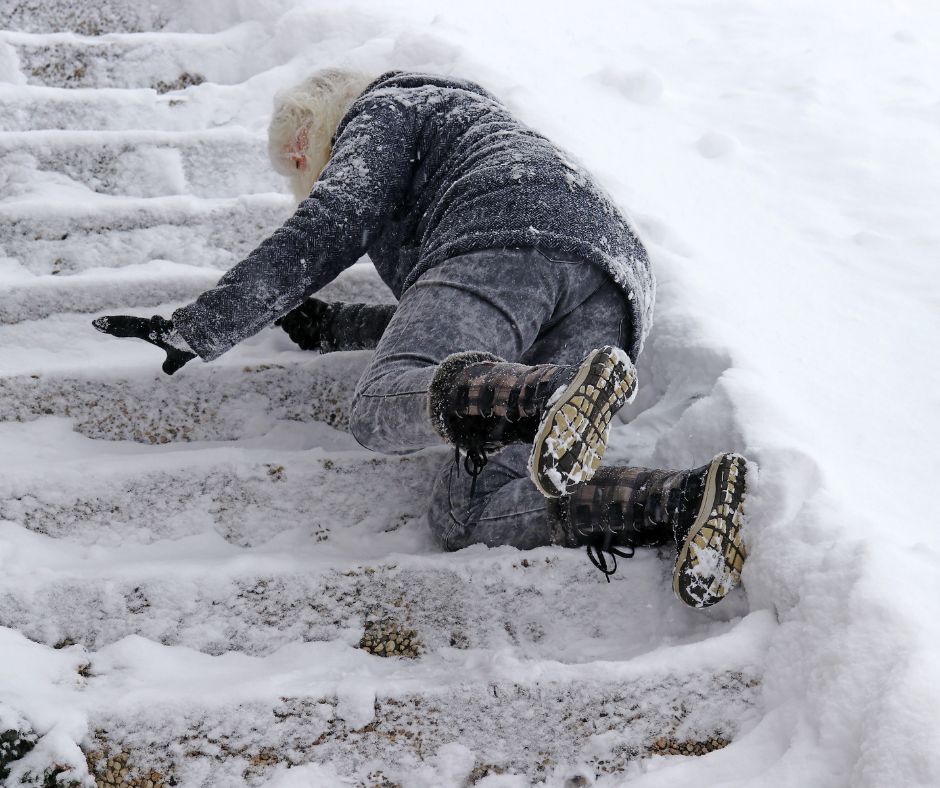
During the winter months, snow, sleet, ice, and rain can cause hazardous walking conditions. If you experience a slip and fall accident when the owner of a property fails to clear away snow or ice, you may have the right to seek compensation.
Yet, in cases like these, you will notice that there are clear deadlines, such as the 60-day notice period, and navigating the claim may be complex. In this article, we will share key points about your rights, when to call a personal injury lawyer, the steps to take immediately after a slip and fall, and the 60-day notice rule.
What Changed in Ontario’s Occupier’s Liability Act?
The Occupier’s Liability Act changed in 2020 with the implementation of the 60-day written notice requirement. This change means that the general two-year limitation period, which was in place prior to Bill 118, has been significantly shortened.
The new Bill 118 means that, generally speaking, action cannot be brought for the recovery of damages for a personal injury that occurs because of ice or snow unless the individual provides written notice, or:
- The plaintiff passes away because of the slip and fall accident
- A judge finds that there is a reasonable excuse for not adhering to the 60 days
However, it is best to consult with a personal injury lawyer about your specific situation to confirm whether the recovery of damages might be possible.
Understanding the 60-Day Notice Rule
If you experience a slip and fall on ice or snow that is present on a commercial or private property, and you want to make a claim, you need to give the responsible owner written notice.
Under the Occupier’s Liability Act, it is generally the case that the notice needs to be provided within 60 days of the incident. This rule is applicable when you slip and fall on private walkways, entrances to businesses, commercial properties, in grocery stores, strip malls, and homes.
Your ability to make a slip and fall injury claim may be affected if you fail to meet the 60-day deadline, but requesting information about your specific case with a slip and fall injury lawyer can shed more light on the situation.
The notice will have to be in writing, highlight the date, time, and location of the incident, mention the hazardous conditions, and be sent to the property owner.
Proving Negligence in Ice-Related Falls
When you need to strengthen your slip and fall claim and prove that the property owner has been negligent, evidence may be helpful. Some of the evidence that can indicate that safe conditions were not maintained, include the following:
- Photos – Taking photos at the scene and capturing the conditions before they alter provides visual evidence. It can show whether hazardous conditions were present on the property owner’s site at the time of the incident.
- Witness statements – You may have your account of the incident corroborated by witnesses who saw the event happen, which may help to establish fault.
- Weather data – Reliable environment data such as those provided by Environment and Climate Change Canada (ECCC) can reveal, for instance, whether the ice formed over several hours or days, which may help prove negligence.
- Maintenance logs – Obtaining records of maintenance work, or evidence logs that reveal a lack of safety measures, may indicate whether the property owner kept the premises safe or failed to take the required actions.
Additionally, since Ontario has different rules for municipal and private property responsibilities, it’s important to consider these differences.
Municipal properties need to be inspected regularly. This includes responding reasonably to ice and snow conditions. Generally, according to the Municipal Act, 2001, municipalities may not be liable for personal injuries caused by snow or ice on a sidewalk except in cases of gross negligence. However, consult with a lawyer to gain a deeper understanding of your case.
In slip and fall cases that involve private property, the occupier needs to clear away snow and ice in a timely way after inspecting walkways and entrances. They need to take reasonable care to maintain safe premises.
Because of these differences, each type of case may require different evidence. For a city sidewalk, for instance, you may require municipal maintenance policies and proof of inspection failures, and for private property, you may need snow removal logs and contractor schedules.
Steps to Take Immediately After a Slip & Fall
Immediately after you experience a slip and fall on ice or snow, you should take specific steps to protect your claim:
- Start by getting medical attention, which can help you determine whether even minor pain may be a more serious injury. It will also give you access to a medical record, which might support your personal injury claim.
- Gather evidence by taking photos of the ice or snow, the entrance, walkway, stairs, and the scene in which the incident occurred. It’s important to act quickly because the icy conditions can change in just a few hours, so you need to capture the scene before this happens.
- Report the incident to the property owner and ask them to complete an incident report, which confirms that a slip and fall occurred and shows where it happened.
- Gather the details of any witnesses (their name and contact information) and ask that they give you details about what they saw, which might help to support your version of events.
- You should then retain physical evidence related to the fall, such as your footwear or damaged clothing as additional evidence.
- Speak to a personal injury lawyer as soon as possible (which will help you send the notice on time and significantly increase your chances of meeting the 60-day notice rule deadline).
Contact a Local Personal Injury Lawyer at Ristich Law
As mentioned, in a situation such as a slip and fall on ice, early legal involvement is vital, helping you minimize evidence loss and meet the 60-day deadline. Schedule a free consultation with a local personal injury at one of Ristich Law’s three convenient locations:
Etobicoke
200-5353 Dundas St. West
Etobicoke, ON M9B 6H8
Ottawa
3029 Carling Ave Suite 202,
Ottawa, ON
K2B 7K3
Whitby
173 Brock St N #104,
Whitby, ON
L1N 4H3
FAQs
What Kind of Compensation Can I Receive from a Slip and Fall on Ice or Snow?
You may be entitled to lost wages, the cost of medical bills, or reduced earning capacity compensation as well as medical or rehabilitation costs if you are involved in a slip and fall incident in Ontario, Canada. It is best to consult a local personal injury lawyer to determine the specific compensation claims for your case.
What if I am Partially at Fault?
In a situation where you are found to be partially at fault because, for instance, you were distracted or wearing the wrong type of footwear, it is generally the case that the compensation could be reduced by the percentage of fault you bear – but speaking with a personal injury lawyer experienced in slip and fall claims will help you learn more about partial faults in this situation.
What is the Limitation Period for Slips and Falls on Municipal Property?
You will find that the limitation period for slips and falls on municipal property is 10 days. This means you have a 10-day deadline in which to bring the incident to the municipal clerk’s attention. Generally, if you fail to give notice, there is not a bar to action when there is a reasonable excuse for the lack of notice. Speak to a lawyer for information on your case.
Tell Us What Happened!
Free Case Evaluation
Getting in touch is easy! Use the form below and request a FREE case evaluation and consultation today.