
Bad Weather Car Accidents: What to Include in Your Claim
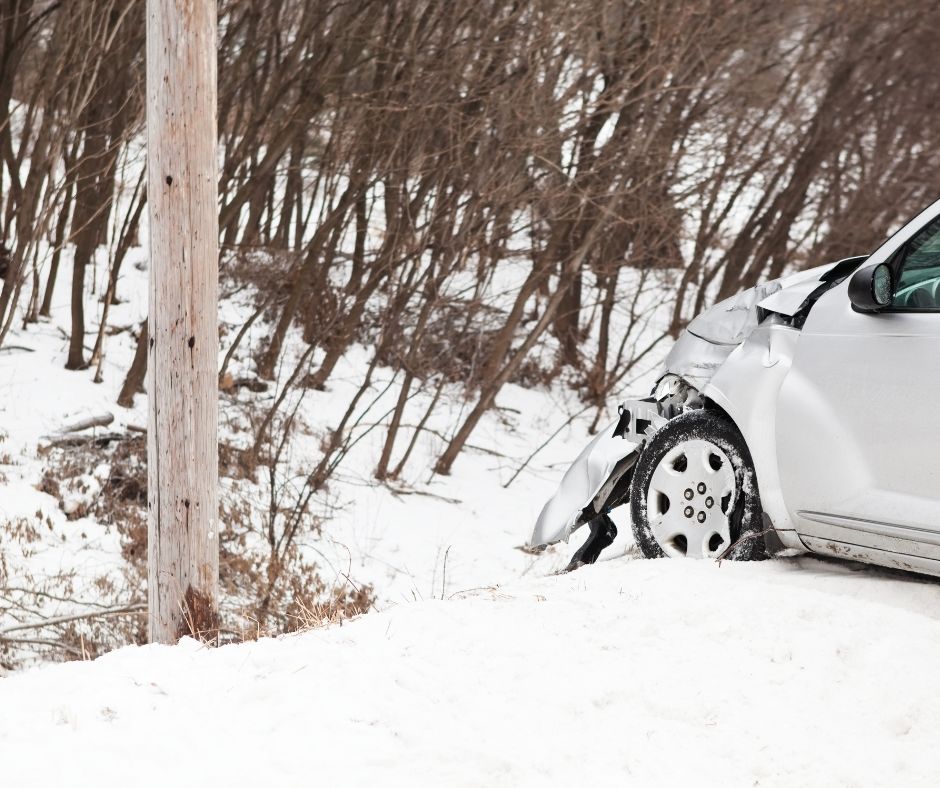
Knowing who is at fault can be difficult to determine, and making a claim requires you to complete a few steps. At Ristich Law, our personal injury lawyers have created this guide to help you successfully make your personal injury claim and secure the compensation you are owed.
Understanding Weather-Related Collisions
Before we look at factors such as insurance challenges and evidence, it is important to first understand weather-related conditions. Rain, fog, snow, and black ice can be dangerous for the following reasons:
- Rain – Reduces traction and causes slick, slippery roads when rain mixes with oil.
- Fog – Makes visibility challenging, leading to incidents when drivers fail to slow down.
- Snow – Minimizes tire traction and requires a reduced speed or tire chains.
- Black Ice – Causes stopping distances to increase and makes it more likely to misjudge distances.
Such conditions do not lessen a driver’s duty of care. For instance, it is essential to acknowledge reduced stopping distances, drive at safe speeds, maintain tires and brakes, and maintain the right distance from other vehicles in adverse conditions. This is because fault is often determined without reference to weather or road conditions, unless there is negligence on the part of the municipality for failure to keep the roads reasonably safe and passable in the winter.
Yet there are still many common scenarios that can occur in bad weather, including rear-end collisions or sliding through intersections. Bad weather increases the chances of such incidents occurring, which is seen in the fact that 30% of motor vehicle accidents in Canada occur when the worst weather conditions occur.
Proving Negligence in Poor Weather
Proving negligence in conditions like these requires looking at the Fault Determination Rules and the Highway Traffic Act that provide specific scenarios as well as a percentage of fault. A few examples of scenarios include rear-end collisions, lacking winter tires, and speeding.
In rear-end collisions, it is generally understood that if a stationary vehicle is struck by a vehicle behind it, that vehicle is at fault. However, there are circumstances where this is not the case. It is important to speak to a professional to inquire about those circumstances.
In other cases, negligence may be shown if a driver lacks winter tires. This is because the driver is responsible for the condition of the vehicle they are using. And while not mandatory in Ontario, winter tires are highly recommended because they improve traction and control in ice and snow and shorten braking distance by almost a quarter.
In collisions that involve speed, drivers can be negligent despite driving below the posted speed limit. If the driver’s speed wasn’t safe for the specific conditions, they could still bear the fault. In fact, many Ontario courts have made rulings that reasonable drivers should and would reduce their speed in snow and ice.
It’s important to note that many insurance companies may state an accident was ‘unavoidable’, claiming that no driver bears fault for the crash and that even a very careful driver would not have avoided it in the circumstances.
For this reason, expert witnesses can be ideal. For instance, accident reconstruction specialists can aid in showing how the accident occurred and work towards showing which driver was negligent in the collision.
Key Evidence to Support Your Claim
Alongside this, key proof can support your insurance claim, whether you are making a claim to your own insurer for SABS (accident benefits), a third-party insurance compensation claim, or a legal claim in which you or the other driver disputes the fault. Evidence can include:
Dashcam Footage – This footage can show the speed, any lane changes, the conditions of the road, and the following distance.
Police Reports – Reports can reveal fault indicators, any charges – if there are any, and notes to indicate the road conditions.
Photo Evidence – Photos can reveal the weather conditions in which you were driving, tire tracks, the positions of the vehicles, and the conditions of the road.
Witness Statements – Statements confirm the speed of the other party, whether the vehicle lost control, whether the other party had been tailgating, and shed light on the incident.
Immediately after the collision, you will need to collect evidence. Acting quickly is key here, because the conditions of the road and the weather can change, which might not reflect the state of the scene as it was during the collision. Ristich Law can support you in securing and preserving the evidence you gather, keeping it organized for an insurance claim or tort claim.
Insurance Challenges & Common Pitfalls
Many insurance companies attempt to minimize payouts by suggesting that both drivers share responsibility, emphasizing the severe weather conditions as a key factor. This can alter the tort compensation or the payouts received.
Therefore, if you are involved in a collision that occurred in bad weather, and an insurance company asks you to provide a recorded statement, it’s important to proceed with caution.
Contacting a car accident injury lawyer before speaking with adjusters is beneficial, helping you avoid harmful statements. Local personal injury lawyers can also communicate with insurers for you and will fight for your rights to fair compensation with the right legal representation.
Contact Ristich Law to Navigate Bad Weather Car Accident Claims
Legal support can make a significant difference to your insurance claim following a collision in bad weather. They can assist you in gathering evidence, communicating with insurers, challenging the ‘unavoidable accident’ defence, and maximizing compensation.
If you have been involved in a car accident in bad weather, seeking legal services is ideal. It will help you navigate the claim with expertise and assistance. Ristich Law has experienced legal professionals who can help you handle your claim. Contact the Ristich Law firm for a free consultation.
FAQs
Who is at Fault for a Collision in Bad Weather
Under the Ontario Insurance Act, drivers, and not the weather, bear responsibility for the collision in bad weather. They are expected to slow down, increase the distance between cars, adjust to slippery roads, and adapt when the conditions are not visible.
What Should You Do Immediately After an Accident?
Always consider the safety of those involved first. Check for any car accident injuries and call for medical attention if required. Then, make sure you contact the police to get a police report, and document the scene to begin gathering evidence.
What is the Statute of Limitations in Ontario for Car Accidents?
This is a time limit that applies if you intend to make a tort, municipal claim, or an accident benefits (SABS) claim. Tort claims must be made within two years of the car accident, while SABS claims involve notifying the insurer within seven days and submitting the forms within 30 days. In certain cases, if you want to make a municipal claim, you have 10 days to provide written notice.
Tell Us What Happened!
Free Case Evaluation
Getting in touch is easy! Use the form below and request a FREE case evaluation and consultation today.